
Four T&M Abstracts Selected for NJWEA’s Conference
April 13, 2026
Four of T&M’s presentations have been selected for the New Jersey Water Environment Association’s 111th John J. Lagrosa Annual Conference and Exposition. Be sure to watch our presentations and visit T&M at booth 508!
The NJWEA Conference brings together water and wastewater professionals to explore emerging trends, regulations, and innovative solutions.
Summary of T&M Presentations at NJWEA:
From Waste to Watts: Reinventing Landfills with Solar and Smart Stormwater
Presented by Michael Thomas, PE, PMP, LEED AP ND, Portfolio/Program Manager
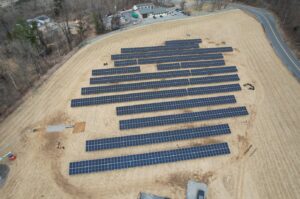
Discover how the Avantor Landfill and Parking Lot Solar Redevelopment Project turned a capped landfill into a showcase for clean energy and smart stormwater management. This presentation will equip stormwater and environmental professionals with practical strategies for navigating NJDEP landfill closure and stormwater permitting, especially when traditional green infrastructure BMPs are not feasible. Attendees will learn how adaptive design and natural systems can fulfill regulatory intent and optimize stormwater management on sensitive sites. By showcasing the integration of renewable energy infrastructure with environmental protection, the session offers a replicable model for sustainable landfill reuse. The Avantor project’s collaborative approach and voluntary stormwater enhancements will inspire participants to pursue innovative, multi-benefit solutions in their own work, expanding their skills and knowledge for tackling complex redevelopment challenges in New Jersey.
Leveraging GIS to Map and Manage MS4 Infrastructure
Presented by Andrew Filippi, PE, Group Manager, and Jen Wolfram, Senior GIS Analyst
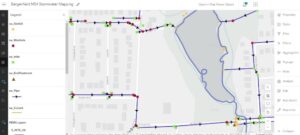
Geographic Information Systems (GIS) tools are used for mapping infrastructure, facilitating permit-required inspections, tracking operations and maintenance workflows, and developing capital asset management plans. This presentation will provide an overview of industry trends related to MS4 mapping, offer insights on NJDEP stormwater permit compliance, explore the various options for executing successful mapping projects ranging from desktop analysis to full-service surveying, and explore post-mapping asset management solutions that save owners time and money.
Managing Odor Control and Corrosion in Complex Force Main Systems
Presented by Michael Gable, PE, Dept. Manager; Michael Kuznetz, PhD, PE, CIH, CSP, Senior Technical Leader; and David Gardellin, President and CEO, Onyx Valve
This presentation highlights the design, construction, and operation of a unique 7.5-mile, 20-inch force main in Pocono Township, Pennsylvania that conveys high‑strength wastewater from major commercial users including Kalahari Resorts, Great Wolf Lodge, and Sanofi, along with smaller residential and commercial sources. The system includes three pump stations with nine pumps operating at capacities from 300 to 3,200 gpm and pressures ranging from 5 to 130 psi, moving flows that vary seasonally from 350,000 gpd to nearly 1.2 MGD, with a design capacity of up to 6.0 MGD at peak discharge. Pumping primarily downhill, the system uses strategically placed pinch valves to maintain a full force main and control off‑gassing. The presentation focuses on lessons learned related to air release and odor control, valve and pump selection, pressure management, hydrogen sulfide mitigation, SCADA monitoring, fluid dynamics, and long‑term operations and maintenance considerations for complex force main systems.
Inspection Technology Cocktail – Using AI, GIS and 360 Cameras to Shake Up Manhole Inspections
Presented by Andrew J. Filippi, PE, CME, Water Group Manager and Veronica Cortes, Staff Designer 1
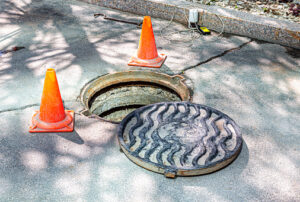
The Phase 2 Interceptor Manhole Inspection project for the Northwest Bergen County Utilities Authority (NBCUA) is part of a multi-phase initiative aimed at evaluating and rehabilitating aging infrastructure within the Authority’s interceptor system. MACP Level II inspections were conducted using RinnoVision Max 360 cameras supplemented with GIS based survey forms and GPS locating. Defect coding and inspection reports were prepared by SewerAI and checked for accuracy prior to inclusion in the final report. This presentation will cover the benefits and challenges with using new technologies efficiently and effectively.